Big Bend: America's Most Underrated National Park
If there’s such a thing as America’s best-kept secret in the national park system, Big Bend is it. It’s vast, wild, almost mythic in scale — and yet, most people have never heard of it. Those who have rarely go. But make the journey, and you’ll wonder why the rest of the country hasn’t caught on.
It’s not easy to get to Big Bend. That’s the first thing you need to know. Tucked into a remote corner of West Texas where the Rio Grande bends hard and slow around the base of Mexico, the park is far from everything — and that’s exactly the point.
You don’t pass through Big Bend on the way to somewhere else. You go there on purpose. And maybe that’s why it feels so untouched. Despite being one of the largest national parks in the lower 48, it’s also one of the least visited. But those who make the journey understand what makes it special. This isn’t a place you consume in a weekend — it’s a place you feel.
A Landscape Built for Stillness
Big Bend doesn’t greet you with grand signage or curated viewpoints. It works on a slower frequency — a kind of visual silence that reveals itself one detail at a time.
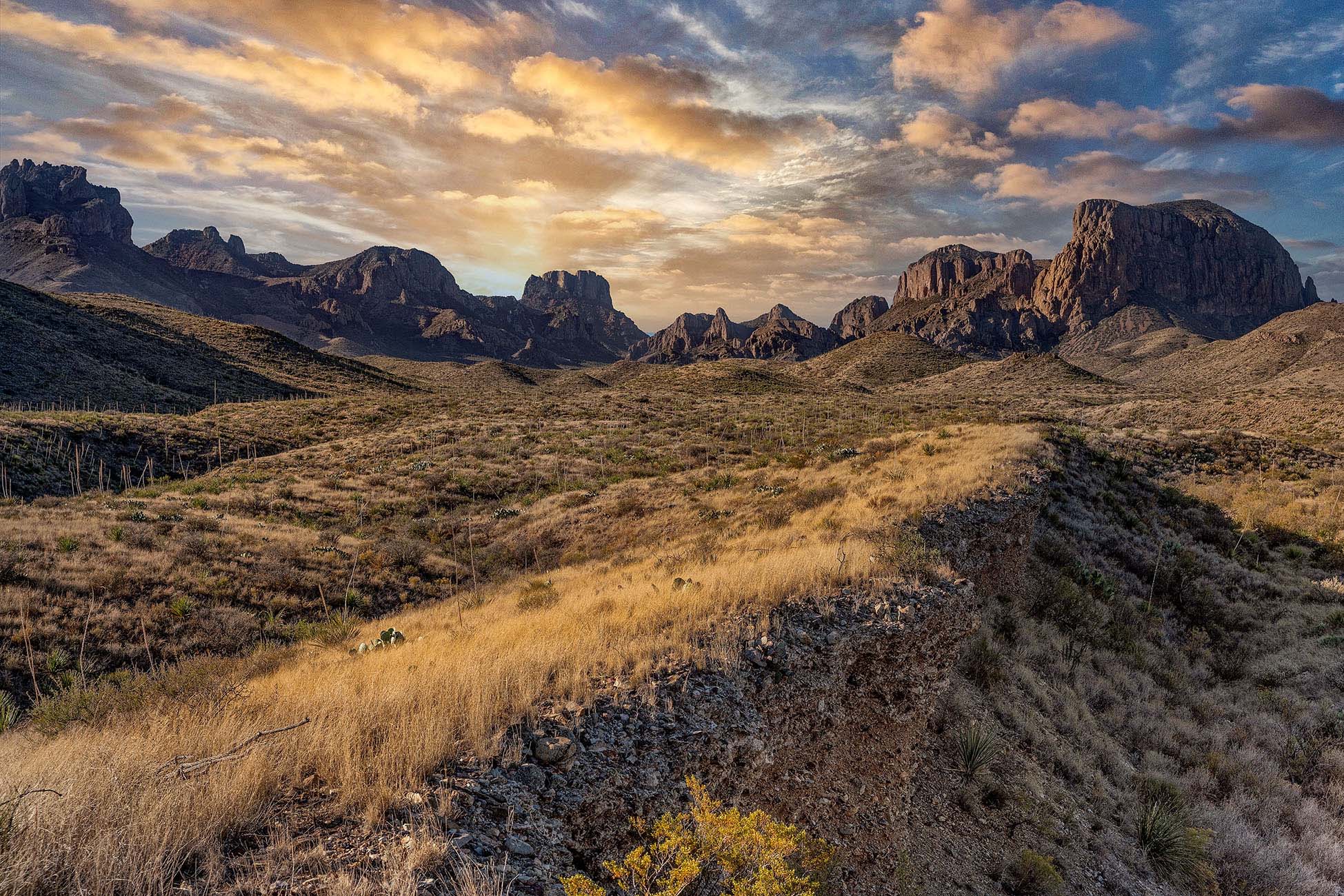
For landscape photographers, it’s a dream. High desert plains stretch out for miles. Rugged mountains rise like islands from the emptiness. The light here changes everything — golden, then pink, then blue, painting each trail and canyon in its own character.
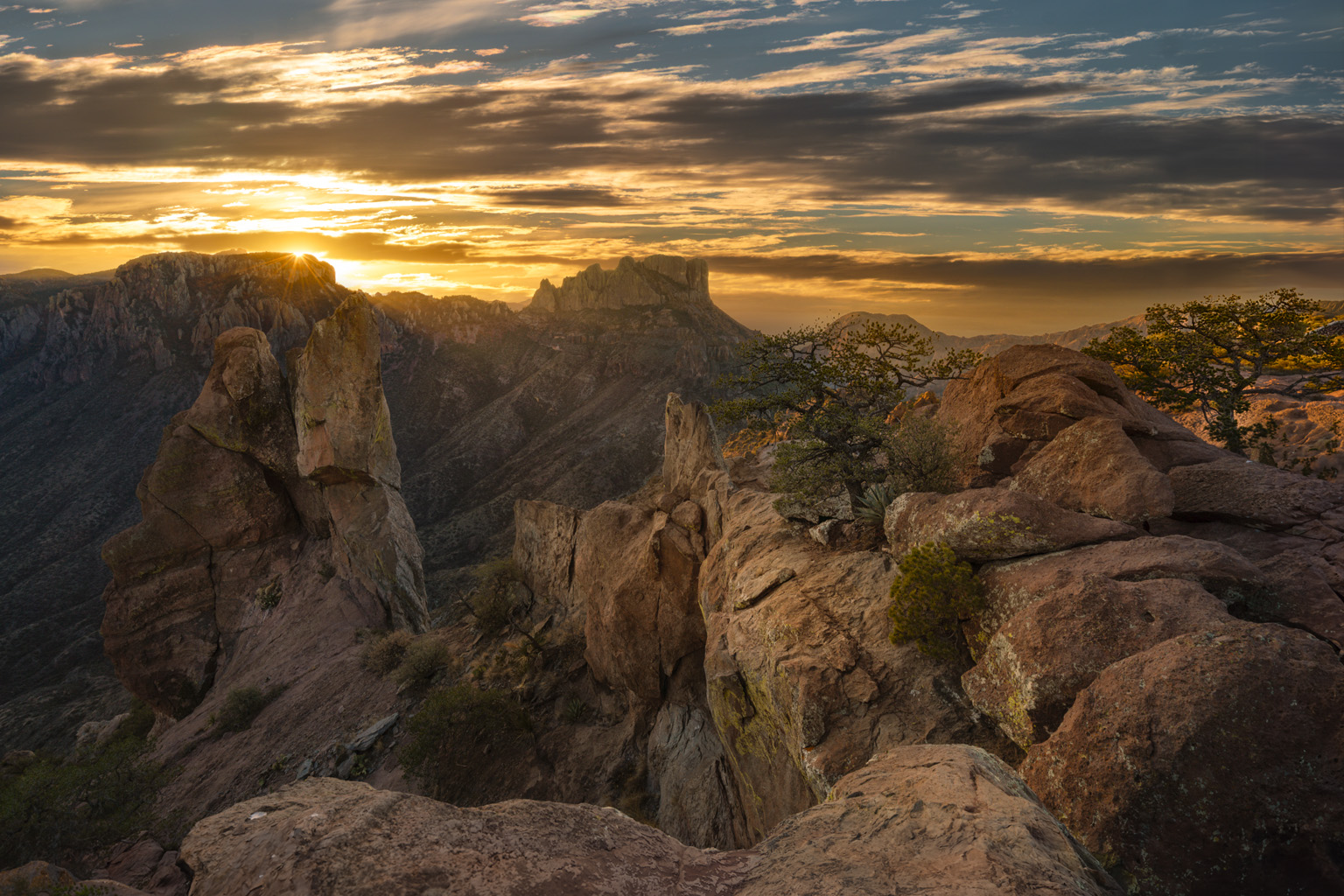
The Lost Mine Trail, especially at sunset, offers one of the best views in the entire park. It’s a steady uphill climb through pine-scented switchbacks, opening suddenly onto a sweeping overlook that turns to gold in the last hour of the day. I’ve captured some of my favorite Big Bend landscape photography here — the kind that reminds you why you carry a camera in the first place.
Other highlights include the Window Trail, where a narrow V-shaped rock formation frames the desert like a living painting, and Balanced Rock, a short hike through the Grapevine Hills that leads to one of the park’s most iconic natural features. The soft, otherworldly color of the boulders in late afternoon makes this a rewarding spot for both casual hikers and serious photographers.
But if there’s one place that feels impossible to capture — and irresistible to try — it’s Santa Elena Canyon. Here, the Rio Grande carves a path between limestone walls that tower fifteen stories above the water. You can wade in, let the current brush your legs, and just stand there — watching light bounce between stone and sky. Whether you’re taking photos or simply standing still, it’s a moment that stays with you.

Crossing the Border
One of the more unexpected experiences in Big Bend is the Boquillas Crossing. With a passport and a few dollars in hand, you can take a rowboat across the Rio Grande to the tiny Mexican village of Boquillas del Carmen — a place so removed from modern life it feels like stepping into a storybook.
There’s a couple of restaurants, cold drinks, and a few handmade souvenirs for sale. The vibe is slow, musical, and kind. For me, it's less about the destination than the reminder of how borders feel on the ground: quiet, human, and full of warmth. The light in Boquillas is soft and dusty — a perfect contrast to the sharp stone of the Texas side — and worth photographing for its colors alone.
The Boquillas Crossing is not open as often as it used to be, due to ongoing issues at the US-Mexico border. The park office can always update you on current status.
Weather, Timing, and What to Expect
Big Bend is not a plug-and-play vacation. It’s remote. It’s hot in the summer. It has almost no cell service. And if you don’t come prepared, it will humble you.
The best time to visit is from late fall through early spring — think November to March — when the weather is cooler and the skies are often clear. Summer temperatures regularly top 100°F, and even spring can surprise you with sudden heat.
Amenities are limited. The Chisos Mountain Lodge is the only in-park lodging, and campsites fill quickly. Nearby towns like Terlingua, Lajitas, or Marathon offer rustic lodging with personality, but they’re still a drive from the trailheads.
Pack extra water. Bring gas. Download your maps in advance. And if you’re a photographer, bring extra batteries — the nearest replacement might be a hundred miles away.

Soulful Escape: A Photographer’s Paradise
If you’re looking for untouched terrain and photographic inspiration, Big Bend delivers in quiet, powerful ways. This is not just a destination for hikers or park badge collectors — it’s a place for people who are drawn to stillness, story, and subtlety.
Many of the images I’ve captured here — from the glow of Lost Mine Trail to the surreal stillness of Santa Elena Canyon — are available as acrylic, metal, canvas, and fine art prints. I chose to photograph Big Bend not because it’s popular, but because it’s personal. If you’ve ever been there, you’ll know why.
Prints Available: Bring Big Bend Into Your Space
If you're drawn to places like Big Bend — the ones that make you slow down and really look — you might find something meaningful in my landscape photography collection.
You can explore Big Bend wall art in multiple print formats, crafted for beauty, longevity, and emotional impact. Whether you're decorating your home, workspace, or looking for a gift that captures a sense of place, there's a story in every print.